The Union government is considering an impeachment motion against Allahabad High Court judge Yashwant Varma, who was indicted by a Supreme Court-appointed probe panel after burnt cash was found at his residence. The government is likely to consult with opposition parties before moving forward with the motion, which would require a two-thirds majority vote in Parliament.
Four days after the top court cleared 10 bills, which were stalled and reserved by Tamil Nadu Governor R N Ravi for the president's consideration, and set a timeline for all governors to act on the bills passed by the state assemblies, the judgement running into 415 pages was uploaded on the apex court's website at 10.54 pm on Friday.

The Supreme Court of India has ordered a progressive reduction in the deputation of Indian Police Service (IPS) officers to Central Armed Police Forces (CAPFs) over the next two years, citing concerns over the delayed promotions of cadre officers. The court's decision aims to address the long-standing grievances of CAPF officers who feel their promotional prospects are hampered by the presence of IPS officers in higher ranks. The ruling also mandates a cadre review of the CAPFs to be completed within six months, addressing the issue of stagnation in the service hierarchy. The court's decision acknowledges the valuable contributions of CAPF officers while also recognizing the need to balance their promotional prospects with the operational requirements of the forces.

India is working with Yemeni authorities and friendly nations to find a solution for Nimisha Priya, the Indian nurse sentenced to death in Yemen for murder. The government is seeking more time for Priya's family to reach an understanding with the victim's family.
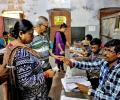
A plea has been filed in the Supreme Court seeking Special Intensive Revision (SIR) of electoral rolls, particularly before parliamentary, state assembly and local body elections. The court has agreed to hear a batch of petitions challenging the Election Commission's decision to undertake special intensive revision of electoral rolls in Bihar.

"Liberty is granted to newly-added respondents (states) to file a response within 15 days from the date of service, and rejoinder if any be filed after 15 days. The interim order to continue and will equally apply to the cases mentioned in the amended writ petition. We direct no further cases be registered without the permission of this court," the bench's order said.

Chief Justice of India Justice B R Gavai on Friday praised Justice Bela M Trivedi for her career trajectory from the subordinate judiciary all the way up to the Supreme Court, where she became the eleventh woman judge to be appointed in its history.

The Rajasthan Legislative Assembly has terminated the membership of BJP MLA Kanwar Lal Meena after he was convicted and sentenced to three years in jail for pointing a pistol at a sub-divisional magistrate. Meena's membership was terminated effective from May 1, following legal opinion from the advocate general and senior legal experts. Meena had approached the Supreme Court seeking suspension of his sentence, but the top court dismissed his plea and directed him to surrender within two weeks. The Election Commission has been informed of the vacancy, and a by-election on the Anta seat would be held within six months.
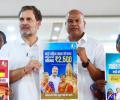
'Rahul Gandhi is not coming to seek votes, but to reach out to people for awareness of their democratic rights.'
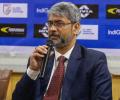
'The AIFF has agreed that: It will conduct an open, competitive and transparent tender (or equivalent process) for selection of a commercial partner to conduct the ISL in line with global best practices.'

The Supreme Court on Thursday refused to entertain a plea alleging contempt of its order on demolition of properties by the authorities in Uttarakhand, Rajasthan and Uttar Pradesh.

The bureau had on June 25 registered an FIR and arrested Majithia in the case allegedly involving laundering of Rs 540 crore of "drug money".

The Supreme Court on Tuesday granted protection from coercive action to a cartoonist accused of sharing alleged objectionable cartoons of Prime Minister Narendra Modi and Rashtriya Swayamsevak Sangh workers on social media.

The petition, filed by 20 students who had appeared for the medical entrance exam, has also sought a direction to the National Testing Agency (NTA) and others to conduct the test afresh.

The committee said the Uttar Pradesh government did not file appeals against the high court's November 8, 2023 order and instead, an impleadment application was filed in the pending plea before the top court.
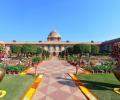
The Supreme Court has ruled that a Governor cannot send bills to the President for consideration if the state assembly has already cleared them for a second time. The court was questioning the Centre over the powers of the Governor when it comes to granting assent to bills.
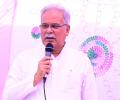
The Supreme Court declined to examine a plea challenging a PMLA provision, stating the issue lies in the law's abuse, not the law itself. The court allowed the petitioner to approach the High Court if procedures weren't followed.
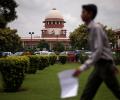
The Supreme Court has initiated a suo motu case regarding investigation agencies summoning lawyers and will examine if they can be put to notice. The action follows the Enforcement Directorate summoning senior lawyers, which was condemned by bar associations.

The Tamil Nadu government has urged the Supreme Court to dismiss the Presidential reference concerning the Governor's powers to assent to bills, arguing it is an 'appeal in disguise' to overturn settled law.

In a big boost to tycoon Gautam Adani, markets regulator Sebi on Thursday cleared the billionaire and his group of stock manipulation allegations made by US short-seller Hindenburg Research, saying fund transfer between group companies did not fall foul of any regulation.
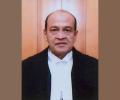
The Supreme Court will hear a plea on Friday seeking a direction to Delhi Police to lodge an FIR over the alleged discovery of semi-burnt stash of cash from the official residence of High Court judge Yashwant Varma. The plea was filed by lawyer Mathews J Nedumpara and three others on Sunday. It challenges the 1991 judgement in the K Veeraswami case, in which the top court ruled that no criminal proceedings could be initiated against a judge of the high court or the top court without the prior nod of the Chief Justice of India. The alleged cash discovery happened following a fire at Varma's Lutyens Delhi residence on March 14, prompting the fire officers to rush to the spot. A Supreme Court-appointed in-house committee visited the residence of Justice Varma on Tuesday to commence its inquiry in the matter. Justice Varma denounced any insinuation and said no cash was ever placed in the storeroom either by him or any of his family members.

Bombay High Court Chief Justice Dipankar Datta was on Monday administered the oath of office as a Supreme Court judge by Chief Justice of India (CJI) D Y Chandrachud.

The Supreme Court has stated it will intervene if there is mass exclusion in the special intensive revision of electoral rolls in Bihar, emphasizing the Election Commission's role as a constitutional authority.
The Supreme Court has deleted its critical observation against Allahabad High Court judge Prashant Kumar, clarifying that it did not intend to embarrass or cast aspersions on him. The decision follows a request from Chief Justice B R Gavai to reconsider the matter.

ISL clubs warn AIFF of possibility of their shutting down entirely if current impasse not resolved
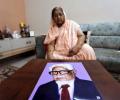
Zakia Jafri, the wife of former Congress MP Ehsan Jafri who was killed in the 2002 Gujarat riots, died on Saturday in Ahmedabad at the age of 86. Ehsan Jafri was among 69 persons who were killed inside Gulbarg Society, a Muslim neighbourhood in Ahmedabad, on February 28, 2002, a day after coaches of the Sabarmati Express train were burnt in Godhra, resulting in the deaths of 59 'karsevaks' returning from Ayodhya. The incident triggered horrific rioting across the state. Zakia Jafri hit the national headlines as she waged a legal battle all the way to the Supreme Court in a bid to hold top political leaders accountable for the large conspiracy for the riots post the Godhra train burning episode. Her son Tanveer Jafri said that his mother was visiting his sister's house in Ahmedabad when she complained of feeling uneasy. The doctor who was called in declared her dead at around 11:30 am. Social activist Teesta Setalvad, who was co-complainant in Jafri's protest petition in the Supreme Court, posted on X that Zakia Jafri was a compassionate leader of the human rights community.
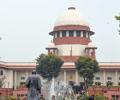
The Supreme Court on Thursday dismissed a batch of pleas seeking to review its October 2023 verdict declining legal sanction to same-sex marriage.
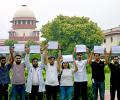
'Residence-based reservation in PG medical courses is violative of Article 14 of the Constitution.'

The court said there is nothing on record to suggest that since 2023, Purkayastha was ever called to join the investigations.
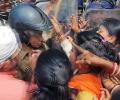
The Supreme Court on Monday refused to entertain a PIL seeking a court-monitored CBI or SIT probe into the violence in West Bengal's Sandeshkhali village, saying the incidents cannot be compared to the savagery in Manipur.
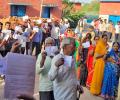
Election Commission officials defend the intensive revision of Bihar's voters' list as 'inclusive' amid criticism from opposition parties, who claim it will disenfranchise voters. The Supreme Court is set to hear petitions challenging the revision.
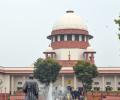
The Supreme Court is scheduled to hear on March 18 a plea seeking to debar from polls, candidates charged with serious offences. The plea, filed by advocate Ashwini Kumar Upadhyay, seeks directions to the Centre and the Election Commission of India (ECI) to restrain such candidates put on trial for serious offences. The plea alleges that despite recommendations of the Law Commission of India and court's previous directions, the Centre and the ECI did not act. The plea also highlights the increasing number of MPs with declared serious criminal cases since 2009, with one MP declaring 204 criminal cases against him, including culpable homicide, house trespass, robbery, criminal intimidation, etc. It claims that political parties are competing with each other in a race to the bottom as they couldn't afford to leave their competitors free to recruit persons with criminal antecedents.
The Supreme Court has directed authorities in Delhi-NCR to relocate stray dogs to shelters, emphasizing public safety and addressing concerns about dog bites, particularly among vulnerable populations.
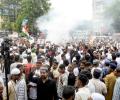
Congress MP Mohammad Jawed and AIMIM president Asaduddin Owaisi have challenged the validity of the Waqf (Amendment) Bill, 2025 in the Supreme Court, arguing that it violates constitutional provisions. The petitions claim the bill imposes arbitrary restrictions on Waqf properties and their management, undermining the religious autonomy of the Muslim community. They also allege that the bill discriminates against Muslims by imposing restrictions not present in the governance of other religious endowments. The bill was passed in the Rajya Sabha and Lok Sabha, with the petitioners arguing that it introduces limitations on the creation of Waqfs based on the duration of one's religious practice, mandates inclusion of non-Muslim members in Waqf administrative bodies, and shifts key administrative functions to government officials, thereby diluting the autonomy of Waqf management.

The Aligarh Muslim University's minority status issue will have to wait to reach a logical end after the Supreme Court majority verdict on Friday asked a regular bench to decide the issue.

The development came in the backdrop of the Supreme Court's direction that details of the deleted names be made public by August 19 and a compliance report be filed by August 22.
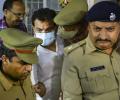
The Supreme Court on Monday said nobody except the accused, victims' representatives and their lawyers shall be present in the court conducting the trial in the Lakhimpur Kheri violence cases in which Union minister Ajay Kumar Mishra's son Ashish is among those facing prosecution.
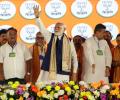
BJP strategists are missing something somewhere, and they have not acknowledged it, to be able to repair it in good time, points out N Sathiya Moorthy.
A bench of Justices B R Gavai and Augustine George Masih observed it was pained to say that some of the observations made in the high court order depicted total insensitiveness and an inhuman approach.
"It is shocking that the Supreme Court is adjudicating bail pleas in cases that should be disposed of at the trial court level. The system is being burdened unnecessarily," Justice Oka said while hearing a bail plea.
